Deciding to learn an instrument is one of the most rewarding choices you can make, and the good news is that the hardest part is simply starting. You do not need talent, expensive gear, or hours of free time. You need a clear first step and a little patience with yourself.
Pick the instrument you actually want to hear#
People often choose an instrument because it seems easy or because someone told them they should. That rarely lasts. The instrument you stick with is the one whose sound makes you lean in. If you hum guitar riffs in the shower, start with guitar. If piano melodies get stuck in your head, start there.
Practicality matters too. Consider your living space, your budget, and your neighbours. A digital piano with headphones is apartment-friendly. An acoustic guitar travels well and needs no power. Drums are joyful but loud, so an electronic kit may save your relationships. There is no wrong answer, only the one that fits your life right now.
Motivation is not a personality trait. It is a side effect of choosing something you care about and seeing yourself improve at it.
If you are torn between two instruments, borrow or rent before you buy. A weekend with a real instrument tells you more than a week of reading reviews.
Set up a space and a tiny habit#
The single biggest predictor of progress is not how long you practise but how often. A musician who plays ten focused minutes a day will sail past someone who crams for two hours once a fortnight. Frequency builds the physical coordination and memory that music depends on.
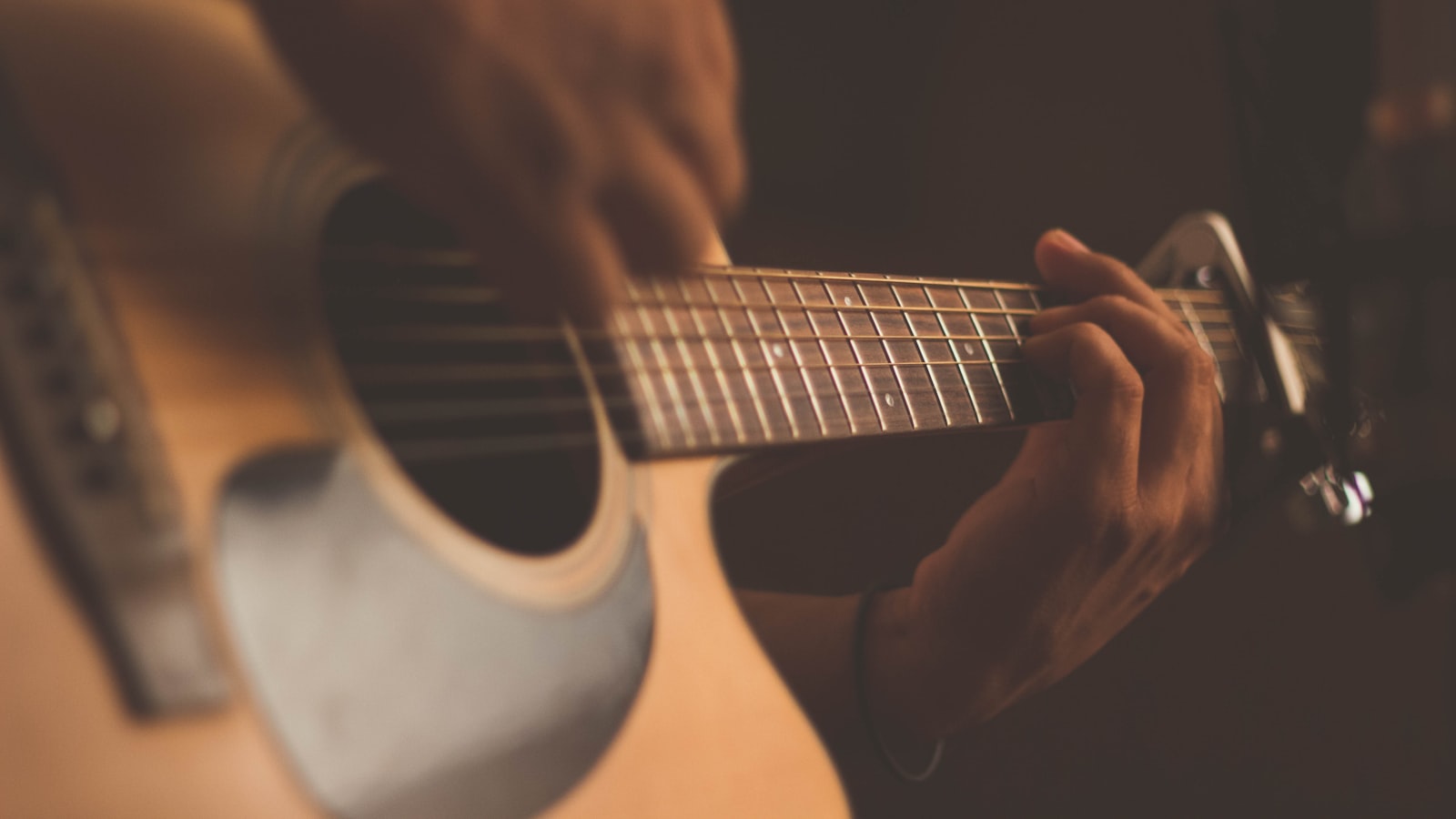
Make starting effortless. Leave your instrument out on a stand, not zipped inside a case in a cupboard. When the guitar is already in your hands the moment you sit down, you remove the friction that kills new habits. Pick a consistent trigger, such as right after your morning coffee or before dinner, and attach your short session to it.
Keep early sessions genuinely small. Five to fifteen minutes is plenty at the start. You are not trying to exhaust yourself; you are trying to show up tomorrow. If you finish a session still wanting more, that is exactly right. End on a high note and you will be eager to return.
Learn the absolute basics, then a real song#
Every instrument has a small set of fundamentals worth learning first. On guitar, that is a handful of open chords and how to change between them. On piano, it is finding the notes and playing simple five-finger patterns with both hands. On drums, it is a steady beat with the kick, snare, and hi-hat. These basics unlock most beginner music.
Do not stay in drill-land too long, though. The fastest way to lose heart is to practise scales and exercises forever while never playing anything that sounds like music. As soon as you can, learn one real song you love, even a simplified version. Playing something recognisable, however rough, is the reward that keeps the whole project alive.
Use a metronome or a backing track early. Playing in time is a skill, and it is far easier to build it from the start than to fix sloppy timing later. Set the tempo slow enough that you can play cleanly, then nudge it up only when the notes feel comfortable.
Use good resources and consider a teacher#
There has never been a better time to learn at home. Free video lessons, structured apps, and song tutorials cover nearly everything a beginner needs. The risk is jumping between dozens of sources and never finishing anything. Choose one structured course or app and follow it for a few weeks before you judge it.
A teacher, even occasionally, accelerates everything. A good teacher spots the small posture and technique mistakes you cannot see in yourself, and they keep you accountable. If weekly lessons are out of budget, a single lesson every few weeks, or an online check-in, still pays off enormously. Bring specific questions so you get the most from the time.
When you choose self-guided material, prefer resources that explain why, not just what. Understanding why a chord is fingered a certain way helps you adapt when you meet the next one. It also keeps you from blindly copying a video and getting stuck the moment something looks slightly different.
Protect your body and stay patient#
Music is physical, and new movements can strain muscles and joints that are not used to them. A little soreness is normal; sharp pain is a signal to stop. Build up gradually and take breaks, especially with your hands, wrists, and, for singers, your voice. Stretch gently before and after, sit or stand with relaxed posture, and never push through pain to hit a practice goal. Protecting your hands and ears today is what lets you keep playing for years.
Progress in music is not linear. Some weeks everything clicks; other weeks you feel stuck or even worse than before. That plateau feeling is not failure, it is your brain consolidating. Keep your sessions short and consistent through the flat patches and the next breakthrough will arrive.
Here is a simple starting checklist to keep you on track:
- Pick one instrument and get it set up where you can see it.
- Schedule a five to fifteen minute daily slot tied to an existing habit.
- Choose one course or app and one song you want to play.
- Track your streak so showing up becomes its own reward.
The musicians you admire all began exactly where you are now, fumbling through their first chords and beats. What separated them from everyone who quit was not talent but the decision to keep returning, gently and often. Set your instrument out tonight, play for ten honest minutes tomorrow, and trust the small daily reps. Make more music, one short session at a time, and a year from now you will astonish your past self.