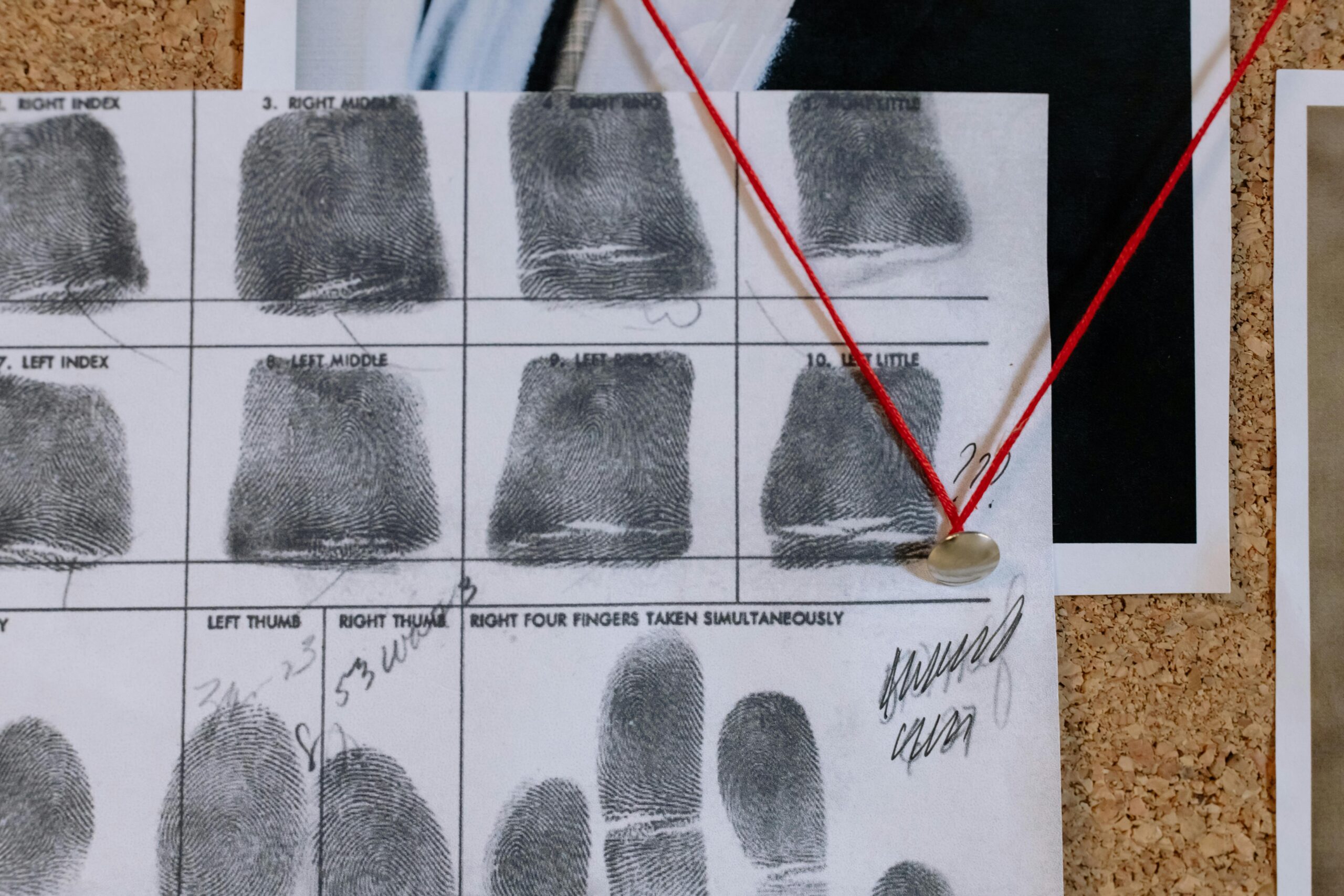
DNA analysis has revolutionized forensic science, yet mixtures and partial profiles present significant challenges that demand specialized expertise and sophisticated technology.

🧬 The Foundation: Understanding DNA Profiling Basics
DNA profiling serves as the cornerstone of modern forensic investigations, providing investigators with powerful tools to identify individuals with remarkable precision. At its core, DNA analysis examines specific regions of human genetic material called Short Tandem Repeats (STRs), which vary significantly between individuals. These variations create unique genetic signatures that can link suspects to crime scenes or exonerate the innocent.
Traditional DNA analysis works best with clean, single-source samples collected under ideal conditions. When forensic scientists receive a pristine sample from a single contributor, the interpretation process follows a relatively straightforward path. However, real-world crime scenes rarely provide such perfect conditions. Evidence often contains genetic material from multiple individuals, degraded samples, or insufficient quantities of DNA to generate complete profiles.
The human genome contains approximately 3 billion base pairs, but forensic DNA analysis typically examines only 20-24 specific locations. These carefully selected markers provide sufficient statistical power to distinguish between individuals while remaining practical for laboratory analysis. Modern DNA profiling kits amplify these specific regions using Polymerase Chain Reaction (PCR) technology, creating millions of copies from tiny starting amounts.
When DNA Tells Multiple Stories: The Challenge of Mixture Interpretation
DNA mixtures occur when biological evidence contains genetic material from two or more contributors. These complex samples emerge frequently in forensic casework, appearing in sexual assault evidence, touched objects, shared weapons, and surfaces contacted by multiple people. The interpretation of mixed DNA profiles represents one of the most challenging aspects of forensic genetics.
Mixture analysis becomes exponentially more complex as the number of contributors increases. A two-person mixture requires careful deconvolution, but remains manageable with proper statistical approaches. Three-person mixtures push the boundaries of reliable interpretation, while four or more contributors often render traditional analysis methods ineffective. The ratio of DNA contributions further complicates matters—when one person contributes significantly more genetic material than others, minor contributors may appear as barely detectable artifacts.
Several factors influence mixture complexity. The ratio between major and minor contributors determines whether analysts can distinguish separate profiles. Degradation affects contributors differently depending on when and how they deposited their DNA. Allele dropout occurs when one copy of a genetic marker fails to amplify, creating false homozygous appearances. Allele drop-in happens when stochastic effects or contamination introduce unexpected peaks in the electropherogram.
Peak Height Ratios and Stochastic Effects 📊
Forensic scientists examine peak height ratios in electropherograms to assess mixture proportions. In single-source samples, sister alleles (the two copies of each STR marker) typically display balanced peak heights. Mixtures disrupt this balance, creating overlapping peaks at shared alleles and additional peaks at unique alleles. Analysts must distinguish true alleles from background noise, stutter peaks, and artifacts introduced during amplification or detection.
Stochastic effects become pronounced when working with low-template DNA samples containing fewer than 100-200 picograms of genetic material. At these quantities, random sampling during PCR amplification produces unpredictable results. Some alleles may amplify preferentially while others fail to appear, creating incomplete or misleading profiles. This randomness makes replicate testing essential, though it consumes precious evidence that may already be in limited supply.
Partial Profiles: Working With Incomplete Genetic Puzzles
Partial DNA profiles emerge when samples contain insufficient genetic material to generate results at all tested STR markers. These incomplete profiles appear frequently in forensic casework, resulting from degraded evidence, minimal DNA transfer, or environmental exposure. Despite their limitations, partial profiles can provide valuable investigative leads and sometimes generate sufficient statistical weight for courtroom presentation.
The evidential value of partial profiles depends on multiple factors. The number of successfully typed markers directly impacts statistical significance—profiles with 15-20 markers carry substantial weight, while those with only 5-6 markers may offer limited discriminatory power. The rarity of observed alleles matters significantly; uncommon genetic variants provide more information than frequently occurring ones. Population databases inform likelihood ratio calculations, helping analysts assess how many individuals might share the partial profile.
Degradation patterns influence partial profile quality. Chemical degradation breaks DNA strands, disproportionately affecting larger STR amplicons. This creates characteristic patterns where smaller genetic markers amplify successfully while larger ones fail. Environmental exposure to moisture, heat, ultraviolet radiation, and microorganisms accelerates degradation. Touch DNA evidence presents particular challenges, often yielding partial profiles from the minimal genetic material transferred through casual contact.
The Low Copy Number Debate 🔬
Low Copy Number (LCN) analysis attempts to generate profiles from extremely small DNA quantities, typically below standard laboratory thresholds. This technique increases PCR cycle numbers to amplify minute starting amounts, making previously untestable samples analyzable. However, LCN analysis intensifies stochastic effects, raising concerns about reproducibility and reliability.
The forensic community remains divided on LCN methodologies. Proponents argue that careful interpretation with appropriate statistical frameworks can extract valuable information from trace evidence. Critics emphasize heightened risks of contamination, allele dropout, and misleading results. Many jurisdictions impose strict validation requirements and enhanced quality control measures for LCN casework. The technique demands exceptional laboratory practices, including dedicated equipment, rigorous contamination monitoring, and mandatory replicate testing.
Statistical Frameworks: Quantifying Uncertainty in Complex Profiles
Modern DNA interpretation relies heavily on probabilistic genotyping software that applies statistical models to complex mixture and partial profile data. These sophisticated programs consider numerous variables simultaneously—peak heights, stutter ratios, degradation patterns, and population genetics—to calculate likelihood ratios comparing prosecution and defense hypotheses.
Likelihood ratios express how many times more probable the evidence would be if the prosecution hypothesis were true compared to the defense hypothesis. A likelihood ratio of 1 million indicates the evidence is one million times more likely under the prosecution scenario. These ratios depend critically on the propositions being compared, the assumed number of contributors, and the individuals designated as known contributors versus unknowns.
Several probabilistic genotyping software packages dominate forensic laboratories worldwide. STRmix, TrueAllele, EuroForMix, and LikeLTD each employ different mathematical approaches to handle mixture complexity. Despite methodological differences, validation studies generally show these systems produce concordant results when analyzing the same evidence. However, analysts must understand their chosen software’s assumptions, limitations, and appropriate application range.
The Importance of Validation Studies
Rigorous validation underpins reliable DNA interpretation. Laboratories must demonstrate their methods produce accurate, reproducible results across the range of samples encountered in casework. Validation studies test sensitivity, specificity, reproducibility, and robustness under various conditions. These studies examine mixture ratios, degraded samples, low-template DNA, and environmentally insulted evidence.
Internal validation requires each laboratory to verify published methods work correctly in their specific environment with their equipment, reagents, and analysts. External proficiency testing provides independent assessment, sending unknown samples to laboratories for blind analysis. Discrepancies trigger investigations to identify root causes—whether systematic issues, analyst error, or statistical interpretation differences. Quality assurance programs maintain ongoing performance monitoring through regular audits, replicate testing, and technical reviews.
🧪 Technological Advances Transforming Complex DNA Analysis
Next-generation sequencing (NGS) represents the cutting edge of forensic DNA technology. Unlike traditional capillary electrophoresis, which measures fragment length, NGS determines actual nucleotide sequences. This additional information helps resolve mixtures by identifying sequence variations within STR regions that length-based methods cannot distinguish. NGS also enables simultaneous analysis of hundreds of genetic markers, dramatically increasing discriminatory power.
Massively parallel sequencing platforms process multiple samples simultaneously, improving laboratory throughput while reducing per-sample costs. The technology excels at analyzing degraded samples by targeting shorter amplicons and providing redundant sequence coverage. For mixture interpretation, sequence-based alleles offer additional dimensions for deconvolution, though data analysis complexity increases substantially.
Rapid DNA instruments bring laboratory capabilities to field environments, generating profiles in less than two hours without specialized personnel. These self-contained systems automate extraction, amplification, separation, and detection within a single cartridge. While current rapid DNA technology handles single-source samples effectively, mixture interpretation capabilities remain limited. Future developments may extend rapid systems to handle increasingly complex casework scenarios.
Real-World Applications and Case Examples 👥
Sexual assault investigations frequently involve complex DNA mixtures combining victim and perpetrator genetic material. Differential extraction techniques attempt to separate epithelial and sperm cells, but complete separation rarely occurs. Analysts must deconvolute mixed profiles, often working with unequal contributor ratios and partial profiles from degraded evidence. Probabilistic genotyping has revolutionized sexual assault casework, enabling interpretation of samples previously considered too complex.
Touch DNA evidence presents unique challenges. The minimal genetic material transferred through casual contact typically produces partial profiles with pronounced stochastic effects. Multiple contributors often deposited DNA at different times under unknown circumstances. Determining when and how DNA arrived on evidence items requires careful consideration of transfer mechanisms, persistence, and background DNA populations.
Mass disaster victim identification relies heavily on partial profile analysis when recovering degraded remains from harsh environments. Disasters involving fire, water, or prolonged environmental exposure severely compromise DNA quality. Forensic teams must extract maximum information from compromised samples, often working with bone and teeth as the only viable sources. Kinship analysis comparing victim profiles to reference samples from relatives adds complexity, requiring specialized statistical approaches.
Legal and Ethical Considerations in Complex DNA Interpretation ⚖️
Courtroom presentation of complex DNA evidence requires careful explanation of uncertainty, statistical frameworks, and underlying assumptions. Defense attorneys increasingly challenge probabilistic genotyping results, questioning software validation, analyst training, and alternative hypotheses. Expert witnesses must communicate technical concepts accessibly while accurately representing scientific limitations.
The “prosecutor’s fallacy” represents a common misinterpretation where evidence strength is conflated with guilt probability. A likelihood ratio indicating evidence is one million times more likely under the prosecution hypothesis does not mean the defendant is guilty with 99.9999% certainty. Proper statistical interpretation requires considering prior probabilities and other case evidence, concepts that challenge both legal professionals and jurors.
Cognitive bias presents ongoing concerns in forensic DNA interpretation. Sequential unmasking protocols limit analyst exposure to potentially biasing case information during interpretation. Linear sequential unmasking reveals information progressively, with analysts first examining evidence profiles blindly, then incorporating minimal necessary reference information, and finally considering full case context. These approaches reduce confirmation bias while maintaining interpretative flexibility.
Training the Next Generation of DNA Analysts 🎓
Complex DNA interpretation demands extensive training combining molecular biology, population genetics, statistics, and quality systems. Forensic DNA analysts typically require advanced degrees in relevant sciences plus 6-12 months of supervised casework before achieving independent analyst status. Continuing education keeps practitioners current with evolving technologies, statistical methods, and legal precedents.
Proficiency in probabilistic genotyping requires additional specialized training. Analysts must understand Bayesian statistics, likelihood ratio interpretation, and their software’s mathematical foundations. Hands-on experience analyzing known mixtures of varying complexity builds interpretative skills before tackling unknown casework. Regular competency testing ensures analysts maintain proficiency throughout their careers.
Interdisciplinary collaboration enhances complex case interpretation. Forensic biologists work alongside statisticians, computational scientists, and case investigators to optimize evidence value. Regular technical reviews provide opportunities for peer consultation on challenging interpretations. Professional organizations facilitate knowledge sharing through conferences, workshops, and published guidelines establishing community standards.
The Future Landscape of Forensic DNA Analysis 🔮
Artificial intelligence and machine learning algorithms show promise for pattern recognition in complex DNA profiles. These approaches might identify contributor numbers, estimate mixture ratios, and suggest deconvolution strategies. However, implementation requires extensive validation and careful consideration of transparency, reproducibility, and courtroom admissibility standards.
Expanded marker sets incorporating single nucleotide polymorphisms (SNPs), insertion-deletion polymorphisms (indels), and microhaplotypes will increase resolution for challenging samples. These markers offer advantages for degraded DNA, mixture deconvolution, and ancestry inference. Phenotypic markers predicting physical appearance characteristics and biogeographical ancestry raise both investigative possibilities and ethical concerns requiring thoughtful policy development.
The growing field of forensic genetic genealogy leverages extended SNP profiles and genealogical databases to identify unknown individuals through distant relatives. This approach has solved decades-old cold cases but raises privacy considerations requiring balanced policies protecting both public safety and genetic privacy rights. As technology advances, the forensic community must continuously evaluate new methods against scientific, legal, and ethical standards.
DNA mixture and partial profile interpretation represents one of forensic science’s most intellectually demanding challenges. Success requires combining sophisticated technology, rigorous statistics, comprehensive training, and thoughtful consideration of scientific limitations. As methods continue evolving, maintaining high standards for validation, quality assurance, and ethical practice ensures DNA evidence serves justice reliably and fairly.